Torsion Springs
Custom Torsion Springs for Precision Torque Applications
Torsion springs are reviewed around torque direction, leg geometry, coil inside diameter, mandrel fit, working angle, material and assembly clearance. Built for OEM buyers who need drawing review, material selection, inspection planning and a clear RFQ path.
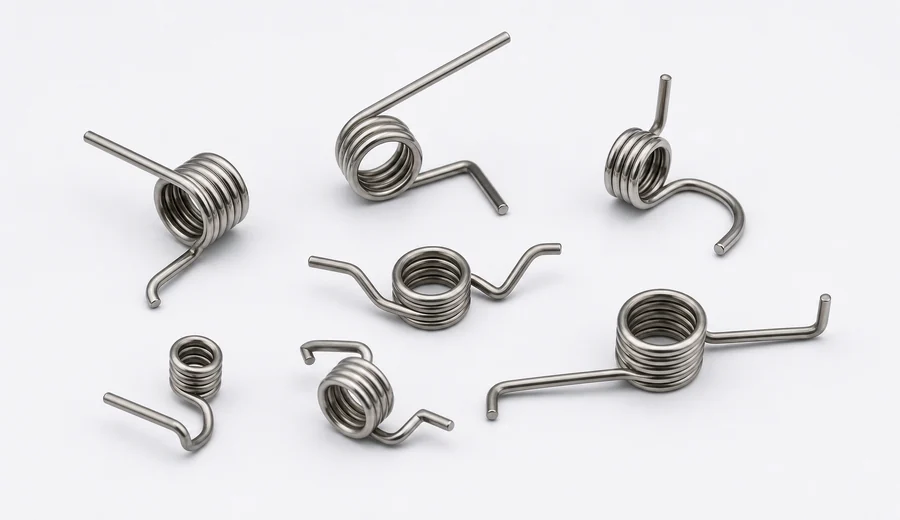
Product and Engineering Review
Torsion springs are reviewed around torque direction, leg geometry, coil inside diameter, mandrel fit, working angle, material and assembly clearance.
| Spring type | Single torsion, double torsion or project-specific torsion spring forms by drawing. |
|---|---|
| Quote basis | Torque, angle, leg form, inside diameter, wire diameter, winding direction, material and quantity. |
| Custom dimensions | Coil diameter, leg angle and working travel are confirmed from the drawing or sample. |
| Materials | Carbon steel, stainless steel, music wire, phosphor bronze and other project-specific materials for review. |
| Finish review | Surface treatment requirements can be reviewed when corrosion or appearance matters. |
| Testing | Dimensional checks and torque checks can be planned according to project requirements. |
| Production route | CNC coiling/forming, heat treatment, leg forming, sorting and inspection planning. |
| Files | PDF, DWG, DXF, STEP, sample photos or a dimension sketch can start the RFQ review. |
| Production wire range | 0.1-4.0 mm production wire diameter range for project screening; drawing-specific feasibility is still reviewed by spring type, material and geometry. |
| Tolerance basis | Tolerance is confirmed by drawing, critical dimensions, material and inspection requirements because custom spring designs vary by geometry and function. |
| Lead time basis | Quotation, sample timing and production delivery are confirmed after drawing, material, quantity and inspection requirements are reviewed. |
RFQ details that speed up review
- Drawing or sample photos with critical dimensions marked.
- Material, finish, quantity target and application environment.
- Load, torque, contact pressure or functional requirement if available.
- Inspection report, packing or batch documentation needs.
Manufacturing Review
- Review winding direction, leg angle and stop features to avoid assembly mismatch.
- Check whether the spring works over a shaft, pin or housing feature before sampling.
- Plan torque inspection points when torque at angle is a critical requirement.
Typical Applications
- Hinges, covers, clips, locks and return mechanisms.
- Consumer electronics, hardware, appliance and fixture assemblies.
- Control levers, small mechanisms and custom OEM devices.
Quality Checks
- Leg angle, coil diameter, free position and formed end geometry can be checked.
- Torque at specified angle can be tested when required.
- Inspection notes can be included for critical assembly features.
Manufacturing Capability Basis
These capability figures support early RFQ screening. Final manufacturability, tolerance and delivery timing still depend on the drawing and order requirements.
Custom Spring Manufacturing Process
Each project is reviewed from the drawing, sample or application requirement before sampling and production planning.
Drawing Review
Confirm dimensions, function, material and missing RFQ details.
DFM Review
Check forming, coiling, springback, stress and assembly risks.
Sample Planning
Prepare sample route and inspection points for engineering review.
Production Setup
Plan coiling, forming, heat treatment, sorting and packing needs.
Inspection
Review dimensional, load, torque or functional checks by project.
Related Pages for Torsion Springs Buyers
Send custom torsion springs drawings for review.
Share your drawing, sample photos, material, quantity and application notes so the project can be checked against manufacturing and inspection requirements.
Frequently Asked Questions
What information do you need to quote custom torsion springs?
A drawing, sample photo or sketch is the best starting point. Please include material, wire diameter or thickness, critical dimensions, quantity, application and any load, torque, contact or inspection requirements.
Can you manufacture from a drawing or sample?
Yes. The RFQ can start from PDF, DWG, DXF, STEP files, sample photos or a dimension sketch. Missing details should be confirmed before sampling.
Which materials are available?
Common review options include carbon steel, stainless steel, music wire, phosphor bronze and brass, depending on the spring type and application requirements.
Can you provide load, torque or dimensional inspection?
Dimensional checks, load testing, torque checks and inspection reporting can be planned when the drawing or project requires them.
Do you support samples before production?
Sample review can be planned before larger production, especially when the part is custom, compact or function-critical.
What should be confirmed before mass production?
Confirm final drawing revision, material, finish, quantity, inspection standard, packing method and any application-specific risks before batch production.